Introduction
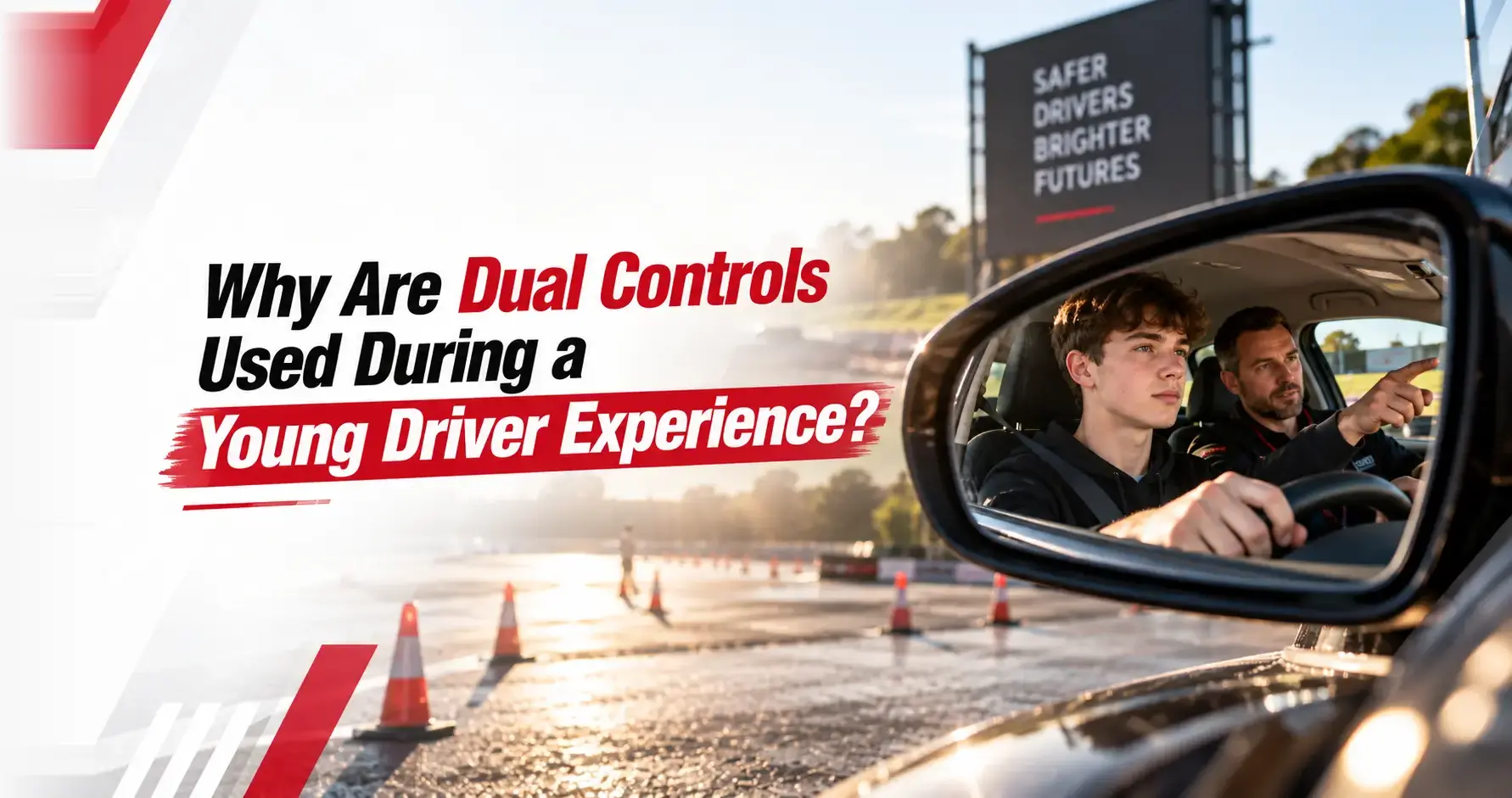
A Young Driver Experience gives your child the chance to sit behind the wheel of a real car, and it’s normal to wonder what happens if they make a mistake. Dual controls are one of the main safety features that answer that question. They let the instructor slow the car down without waiting for the young driver to react.
In this guide you’ll see how dual controls work and when an instructor might actually use them. You’ll also find out what they can’t do, which is just as useful to know before you book.
What Are Dual Controls in a Young Driver Experience?
Dual controls are a second set of pedals fitted on the passenger side of the car. In most cars, this means a brake pedal that the instructor can press with their own foot. Some cars also have a matching clutch or accelerator, and a few use a hand lever for emergency stops.
You’ll find the same idea in driving school cars, so instructors are used to working with it. The young driver uses the normal pedals in front of them, and the instructor’s set just sits there until it’s needed.
That’s what keeps a young driver experience feeling like real driving for the child, while the adult stays ready in the background.
Why Are Dual Controls Needed When an Instructor Is Already in the Car?
An instructor can talk the driver through a problem, but that only works if the driver hears it and reacts in time. Young drivers are often excited or nervous, and a lot of them freeze for a second when something unexpected happens. A child who’s new to a car also tends to take longer to react than someone with years of road experience.
A second brake pedal means the instructor doesn’t have to wait for that moment to pass.
Dual controls also make the session calmer for everyone involved. The instructor can let your child try things at their own pace because they know they can step in. Parents watching from the side tend to relax too, and that usually helps the child feel less pressure.
A few other things dual controls make easier:
- Small mistakes can happen without turning into a big deal
- The instructor can stay relaxed on the tighter parts of the circuit, which helps the child settle as well
- Sessions keep moving when a nervous driver needs a moment to recover
When Might an Instructor Use Dual Controls?
Most of the time, the instructor never touches their pedals at all. When they do, it usually falls into one of two situations.
Braking Too Late or Missing an Instructor’s Stop Instruction
Say a young driver is coming to the end of a straight, and the instructor calls out to brake. The driver is focused on the cones ahead and doesn’t register the words. The car keeps rolling faster than it should, so the instructor presses their own brake and brings the speed down smoothly.
Once everything is steady, they talk about what happened and let the driver try that braking point again.
Pressing the Wrong Pedal or Accelerating Unexpectedly
New drivers often mix up their pedals, and it happens more when they’re excited. Pressing the accelerator when they meant to brake is a very common slip for beginners.
The instructor can use the dual brake to cut the speed straight away and then calmly point out which pedal is which. Because this is a normal part of learning, it rarely feels like a big deal to the child.
Does Having Dual Controls Mean the Instructor Drives the Car?
No, the instructor doesn’t drive the car for the young driver. They only use their pedals when safety needs it. Your child still steers the car and handles the accelerator for the rest of the session.
If the instructor took over often, the child would learn very little and would probably lose interest quickly. A young driver experience only works when the young person stays in charge of the drive.
Instructors usually try to use the dual brake gently. A smooth slowdown keeps the driver calm, while a sudden stop can make a young person tense up for the rest of the session.
What Are the Limitations of Dual Controls in a Young Driver Experience?
Dual controls help a lot, but they don’t solve everything. Knowing where they stop helps you set the right expectations before the day.
- A brake pedal can slow the car down, but it can’t steer the car. If a driver turns too sharply, the instructor has to rely on their voice and quick reactions.
- There’s always a short gap between something going wrong and the instructor noticing it, even for experienced people.
- Not every car has the same setup. Some have a full second set of pedals, and others only have a brake or a hand lever.
- Dual controls work best when the session also has a proper briefing and a controlled circuit. The young driver still needs to listen too.
Think of dual controls as one layer of a bigger safety plan. The briefing and the venue matter just as much as the person sitting beside your child.
Conclusion
Dual controls allow the instructor to quickly slow the car if a young driver misses a call or steps on the wrong pedal. They don’t take control of the drive, and they can’t prevent every mistake, but they do provide a useful safety net for a young driver’s experience.
Before you book, check the car setup on the product page and make sure your child meets the age and height rules. Supercar Gift Days lists junior drivers from 10 to 17 with a minimum height of 4 ft 10 in, and an ARDS instructor rides alongside throughout. If you’re unsure about anything, it’s worth asking the team first.